Many are the plans

It has been said that our plans amuse God!   We can all certainly think of plans made at different stages of our lives that have come to nothing and perhaps seem foolish or naïve in retrospect.  Compare the innocence of lambs which have no plans to those which litter the graves of every human being!  Does that mean to say that it is wrong to plan?  Have we not been given brains to weigh up options, consider priorities and find the best solutions to problems?  It is the direction and motive behind every plan that is of greatest significance.  Is the goal solely to satisfy self, even at the expense of others or perhaps in some way to have disregard for God’s ways?  

  • ‘The Lord knows all human plans; he knows that they are futile’ – Psalm 94:11
  • ‘Many are the plans in a person’s heart, but it is the Lord’s purpose that prevails’ – Proverbs 19:21

RISK

Are you risk averse or a risk taker?  Is either position right or wrong? The truth is that from dawn to dusk and from first breath to final gasp, we take risks and are encouraged to do so.  Our parents encouraged us to take risks as we took those initial wobbly steps, holding our hands and then releasing us to walk by ourselves.  Whilst it may be true to say ‘nothing ventured, nothing gained’, everyone lives within what they deem to be acceptable risk levels.  Whether it is in the genes or in a person’s experience of risks already taken and consequences received, our risk parameters become established.  One person with a high risk tolerance may think of someone with a lower level as unnecessarily timid; conversely, the view would be of irresponsibility! Many people routinely took the risk to cross the famous limestone Azure Window on the island of Gozo, but on the 8th March 2017, this ancient arch crumbled into the sea. 

  •  ‘Only those who will risk going too far can possibly find out how far one can go’ – T S Eliot

More to Life

The four stages in the metamorphosis of butterflies are from egg to larva, then pupa and finally to adult butterfly. All of these are living unless perchance they run into someone with a net who collects them – a Lepidopterist, sometimes known as an ‘aurelian’!  Lepidopterology is a branch of entomology (the study of insects) and comes from the Greek for ‘scale’ and ‘wing’.  If you were a butterfly, you should avoid them for they are likely to stick a pin through you and mount you in their collection, after killing you humanely … in a freezer!   Whilst caterpillars have jaws and can bite back if threatened, a butterfly only has a long, curled proboscis, which is like a soft drinking straw—their jaws are gone and so is self-defence.  Margaret Fountaine (1862–1940) was a Lepidopterist who collected more than 22 000 butterflies, published extensively and wrote a diary of more than a million words – that is a serious serial ‘Lepidopterist’.  Imagine going through four life forms and the questions it might generate – who is the real me and will there be more to life after this next mutation? 

  •  ‘No one wants to die. Even people who want to go to heaven don’t want to die to get there. And yet death is the destination we all share. No one has ever escaped it. And that is as it should be, because Death is very likely the single best invention of Life. It is Life’s change agent. It clears out the old to make way for the new’ – Steve Jobs

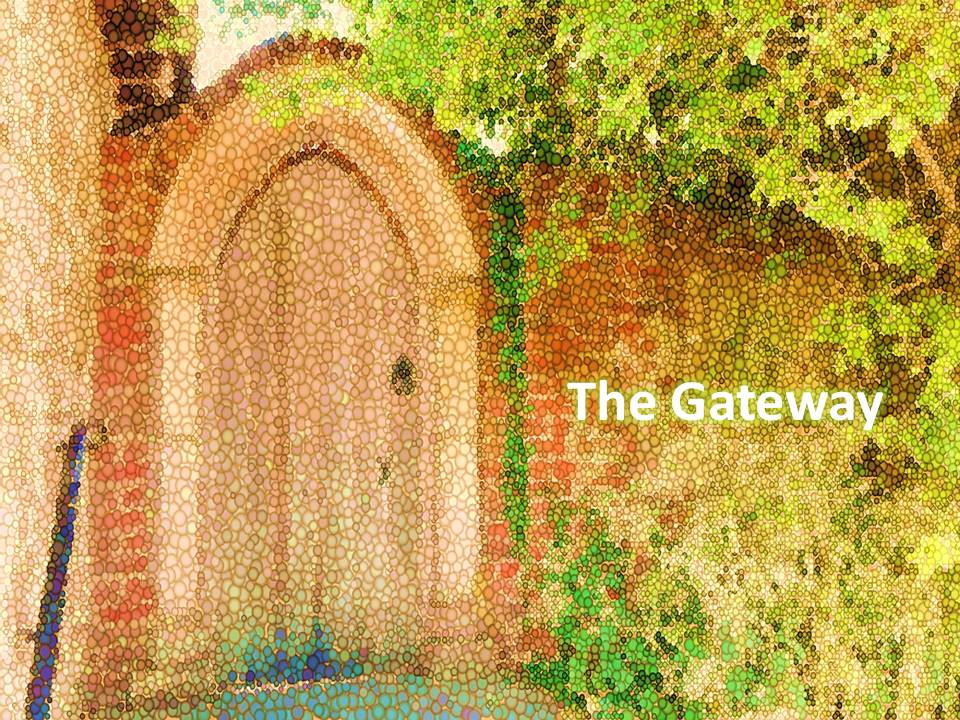
The Gateway

There are many famous gates in the world built to celebrate military victories or to proclaim national prestige.  Obvious ones include the Brandenburg Gate, the Golden Gate (known as the Gate of Mercy in Jerusalem) and Napoleon’s Arc de Triomphe at 49.5 metres high. Not to be outdone by France, North Korea’s Pyongyang’s Arch of Triumph finished in 1982 is three metres taller!  However, at 54 metres high, the Buland Darwaza built in 1576 AD by Mughal Emperor Akbar is the highest gateway in the world.  The pictured gate makes no pretences or grand claims but is simply evocative of ‘secret gardens’ and of things that are beyond.  Every gate is there for a reason but not every gate is noticed nor is the reason for it being there always understood.

  • ‘Still round the corner there may wait a new road or a secret gate’ – J  R R Tolkien

SOWING

Some people are good with seeds, sowing and gardening – you might hear them described as ‘green fingered’!  For others, it is a rare joy when seeds sown begin to resemble any like they look on the packet.  There are so many obstacles to success – too hot, too dry, too cold, too wet, too little time, too much time, birds, cats, too many things to mention!  Even if we bother to clear the ground, have a seed bed and protective netting, it’s a long time from sowing to reaping with no foregone conclusions.  If we couldn’t just pop to the market or a shop, there would be a lot more interest and a lot less procrastination when it comes to the sowing of seeds, leeks or otherwise!

  • ‘Sowing is not as difficult as reaping’ – Johann Wolfgang von Goethe

DYING WELL

There are two things that no one reading this can avoid – birth and death!  It has been said that Christians die well!  Why and how?  It is reported that Christians are the most persecuted religious group in the world – the Centre for the Study of Global Christianity says that 900,000 Christians have been ‘martyred’ in the last decade, equating to 90,000 a year and one every six minutes.  Three hundred thousand Christians in North Korea live in fear for their lives with incentives being offered for information leading to their arrest.  Many other countries have strong opposition and persecution for Christians.  When the church was young, the Roman Empire persecuted Christians for fun.  Stephen was the first martyr and died well because he was filled with the Holy Spirit, walked closely with God and at the end he caught glimpses of heaven, crying out as they stoned him, ‘Lord Jesus, receive my spirit’ (Acts 7:59).  Although we can see no stairway to heaven, there are steps leading there.  Christ Jesus came from heaven so we could eventually join him there and he promises to be with each one who follows him.

A SPACIOUS PLACE

Imagine yourself walking through a dark dense wood – you cannot see a path, the way ahead is blocked by branches, the light is poor and you start wondering if you’re going ‘to make it’.  This experience of feeling boxed in is claustrophobic, debilitating and can be frightening.  People find themselves trapped to the left and the right by many things – guilt, sorrow, shame, besetting sin, lack of self-worth, pain and circumstances.  This is neither how the child of God should live now nor will it be in the future for our inheritance is freedom from the land of shadows.  To discover the way into the spacious places with God is true breakthrough.

  • ‘The truth is I love being alive. And I love feeling free. So if I can’t have those things then I feel like a caged animal and I’d rather not be in a cage. I’d rather be dead. And it’s real simple. And I think it’s not that uncommon’ – Angelina Jolie
  • ‘How does the Meadow flower its bloom unfold? Because the lovely little flower is free down to its root, and in that freedom bold’ – William Wordsworth

on PURPOSE

If you were able to ask this Praying Mantis what its life’s purpose is, it’s unlikely you would get an answer!  And yet it would go about its business of survival and reproduction without a further comment! Many human beings act in the same way on the treadmill of life in their established daily routines, giving little thought as to any ‘grand purpose’. When a baby takes its first breath, it has no concept of there being a purpose to life and certainly has no idea that there is one.  Growing through the life cycle, most people will think about the big question of ‘why am I here’, for it is the most important thing a person wants to discover. Sadly, the majority will draw their last breath without discovering life’s big purpose.