
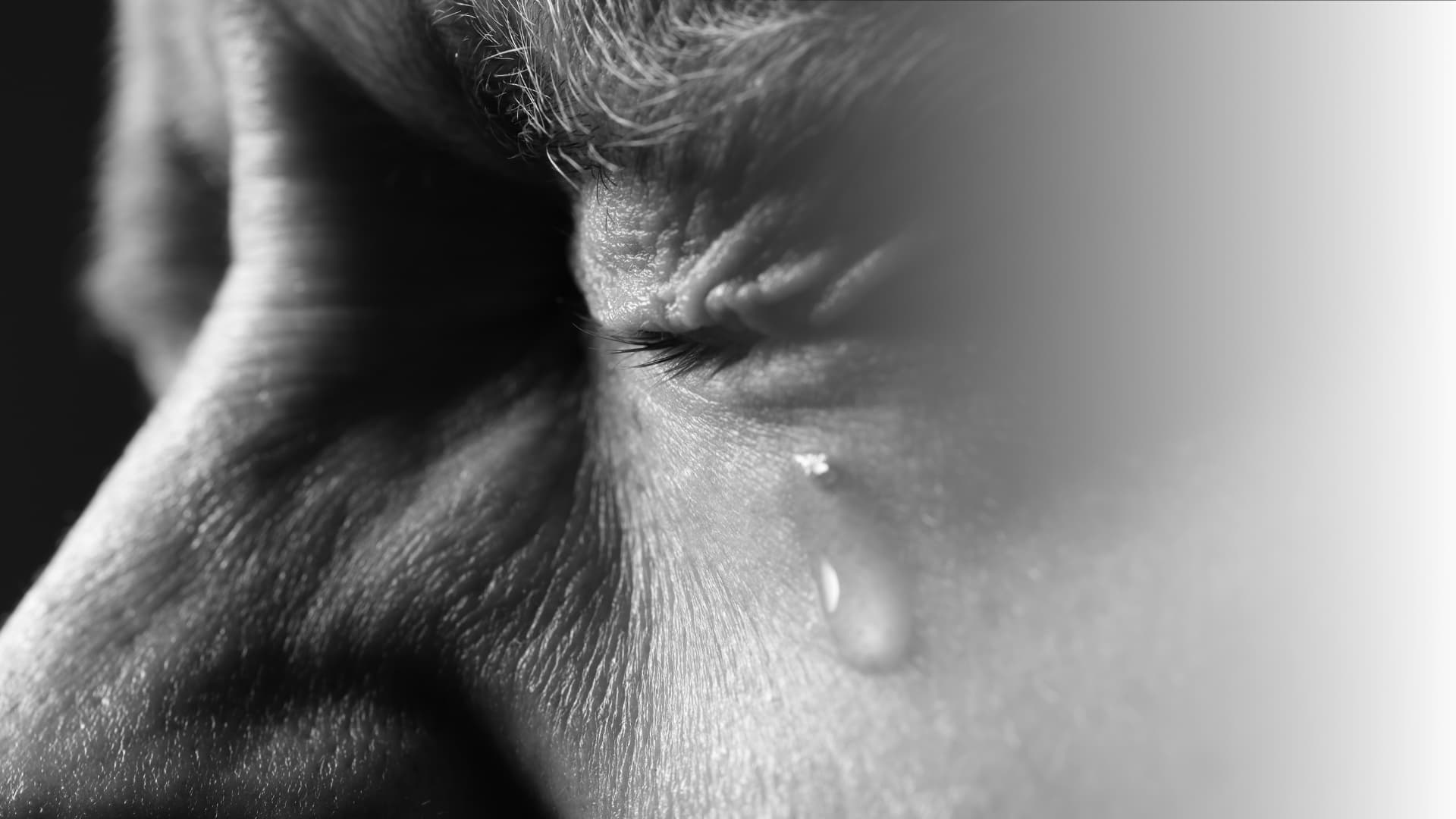
The Tragedies Of The Nepal Disaster And Pastor Robert Guanco’s Death
If anyone says they can make sense of tragedy perhaps they’ve not truly experienced it. Yes, there are practical answers as to what, how and when it happened but not as to ‘WHY?’ Trite answers and platitudes are unhelpful. There are many types of tragedy – death however is part of life for all of us so we need to know where we are anchored for such times.
Two Tragedies
Sudden collapse can affect whole communities as when a massive flash flood on the Nepal-Tibet border in 2026 destroyed homes, swamped roads, and swept away bridges. The cause appears to be a melting glacier – the consequence was well over a thousand deaths with everything swept away, including children and churches.
Pastor Robert Guanco was killed whilst attending the Big Church Festival 2026 in Steyning. The cause – some signage fell on him amongst the thousands attending. The consequence – a widow, fatherless children and a grieving church in Eastbourne.
The Response to the Nepal disaster
Shock, horror and the question ‘why’? Some moments hit so hard they break the world in a single day. A disaster overseas. A leader gone without warning. A community shaken by a tragedy no-one saw coming. When life collapses suddenly, our hearts scramble for meaning and we find if we are anchored in God.
There has been an outpouring of practical support and financial giving to Nepal with volunteers coming from many nations. Organisations like TEAR Fund, British Red Cross and DEC have been channels for financial support. Meanwhile finance, love and prayer is flowing to the family of this young Pastor.
“There are many things we may never fully understand and our hearts may struggle to make sense of what has happened. Yet, even in our deepest sorrow, we continue to trust in the sovereignty of God” – Pastor Norman Ponce from Jesus the Living Water Worldwide Church. Fellow leader Ponce added, he was a “faithful servant of God”. Pastor Guanco was commended again by Ponce: “The seeds he planted through his ministry and his love for others will continue to live on through those he served and the family he left behind.”
Responses do not answer the question ‘Why?
Yet they can bring out profound goodness in the human spirit and reveal God’s deepest anchors. When life breaks without warning, God is the Father Who meets us right there, in the shock. We learn that life is not a rehearsal: this is it.
Four Truths
Sudden tragedy shows whether you are held by these four truths.
- For now, death is part of life – it will not always be so (Revelation 21:4)
- Nothing can separate us from God – neither life nor even death (Romans 8:28-29)
- Dark and light are the same to God – there is nowhere that God is absent (Psalm 139:7-12)
- Jesus Christ brings people through death to life – He is the Resurrection and the Life (John 11:25)
One Anchor
It comes down to this. Jesus Christ is the only One Who can give an immovable, fixed security for your life in the face of disaster and our most feared enemy, death.
‘We have this hope as an anchor for the soul, firm and secure. It enters the inner sanctuary behind the curtain,where our forerunner, Jesus, has entered on our behalf’ – (Hebrews 6:19)
Elisabeth Kübler-Ross
In the 1970s, Kübler-Ross came up with her model of five stages in grief: Denial, Anger, Bargaining, Depression, Acceptance. Tragedy certainly brings these out but a person with a living faith in God often faces it differently and here’s the background.
The Shattering: When Life Changes in a Single Moment
Unexpected tragedy is different from slow suffering.
It’s violent.
It’s disorientating.
It’s surreal.
People search for answers because their minds can’t catch up with reality:
“How do I process sudden tragedy?”
“Where is God in disaster?”
“Why did God allow this?”
“How do Christians cope with unexpected death?”
Events like the Nepal disaster or the death of a pastor during a major church event leave communities stunned. There is no time to prepare. No emotional warning. No gradual decline. Just a sudden absence that feels impossible to accept.
Scripture understands this kind of shock:
- Job 1 — disaster arrives in a single day
- Luke 13:1–5 — sudden tragedy of a collapsed tower killing 18 raised deep questions
- Psalm 46 — “Though the mountains fall into the heart of the sea…”
- The Bible does not pretend these moments are easy but recognises them as earthquakes of the soul.
The Question Again: Why Did This Happen?
When tragedy is sudden, the first instinct is to search for meaning. But Scripture never promises that we will understand the “why” of disaster.
Instead, it gives us three truths:
1. Tragedy is not God’s punishment
Jesus rejects this idea directly (Luke 13:1-5).
He refuses to blame the victims.
2. Tragedy does not take God by surprise
Even when it feels chaotic to us, God is not disorientated.
3. Tragedy is not the end of the story
God’s purposes often unfold in ways we cannot see yet – a bigger picture (Romans 8:28)
Faith does not explain tragedy.
Faith holds onto God when explanations fail – we walk by faith not by sight (2 Corinthians 5:7)
When life collapses, God does not stand at a distance but enters the collapse.
He steps into the rubble.
- Psalm 34:18 — “The Lord is close to the broken-hearted.”
- Isaiah 43:2 — “When you pass through the waters, I will be with you.”
- John 11 — Jesus weeps before He raises Lazarus from death.
- God does not rush to fix what we feel.
- He first sits with us in the shock.
- He is not only the God who restores —
- He is the God who stays.
The Hidden Work: What God Does in Sudden Tragedy
Unexpected collapse often reveals things we didn’t know were there:
1. The strength of community
People gather, pray, support, and carry one another.
2. The fragility of life
We remember what truly matters.
3. The depth of faith
Faith becomes less about feelings and more about trust.
4. The compassion of Christ
He meets us in the exact place where life broke.
5. The seeds of future healing
Not visible yet — but planted in the dark.
God does not waste sudden tragedy.
He transforms it slowly, gently, deeply.
The Path Forward: How to Walk Through Sudden Collapse
People search for “how to cope,” “how to heal,” “how to move forward.”
Slow
Shock takes time to settle. Don’t rush your heart.
Name
Speak the loss honestly and allow emotions to flow. God meets truth, not denial.
Gather
Community for comfort, prayer and shared faith is God’s gift in disaster.
Remember
God is present by His Spirit even when emotions are numb.
Security
Return to Scripture — not for answers, but for stability. Trust the God who walks through the tragedy with you (Psalm 27: 2-3)
Wait
Healing is slow, but hope is stubborn. ‘Wait for the Lord; be strong and take heart and wait for the Lord’ – Psalm 27:14
The Gospel Anchor: God Knows Sudden Tragedy
Christianity is built around a moment of sudden collapse – the crucifixion.
A leader gone.
A community shattered.
A future that seemed destroyed.
But God took the darkest, most unexpected tragedy
and turned it into the centre of redemption.
The cross tells us that God understands sudden loss from the inside.
The resurrection tells us that sudden tragedy is never the final chapter.
Pastoral Close
You may not be able to make sense of sudden collapse.
But God is not asking you to solve it.
He is asking you to bring it to Him.
He meets you in the shock.
He holds you in the grief.
And He walks with you until hope rises again.
Things that are unexplained mysteries to us now are within ‘the secret things that belong to God’, the God we can trust (Deut 29:29).
His sovereignty is where our lives are held safe in His bigger plans (Jeremiah 29:11)
One day we will understand better, we will know as we are fully known (1 Cor 13:12)
For now, we see through a ‘glass dimly’ and must trust God with ‘the why?’- we need grace, comfort and peace which God is pleased to give us through His Holy Spirit, His Word and His People.
The Serenity Prayer
God grant me the serenity
to accept the things I cannot change;
courage to change the things I can;
and wisdom to know the difference.
Living one day at a time;
enjoying one moment at a time;
accepting hardships as the pathway to peace;
taking, as He did, this sinful world
as it is, not as I would have it;
trusting that He will make all things right
if I surrender to His Will;
that I may be reasonably happy in this life
and supremely happy with Him
forever in the next.
Amen.
Reinhold Niebuhr (1892-1971)
Comments