
Trading Digital Anxiety for Unshakable Peace
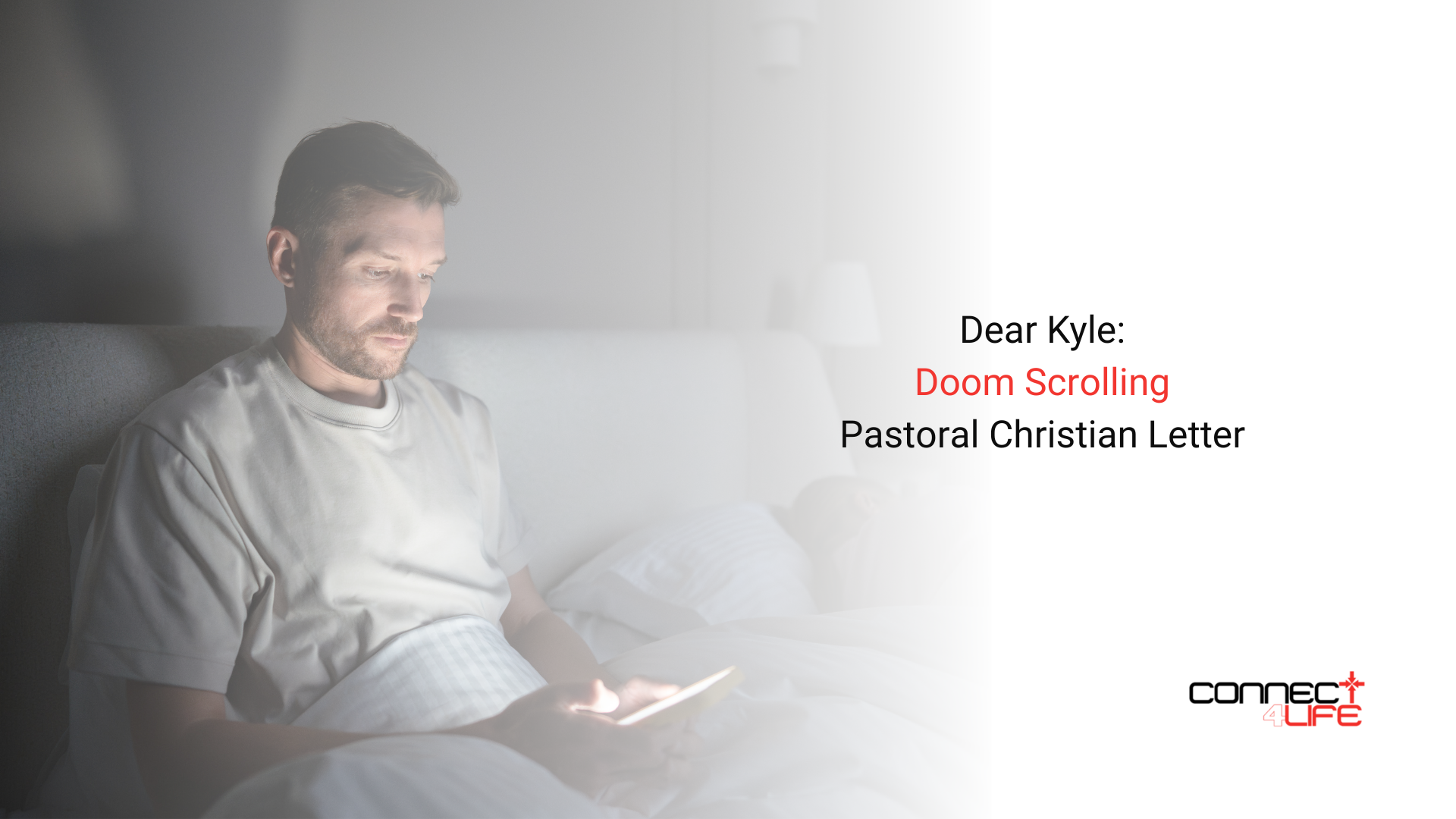
Between ongoing global conflicts, the cost-of-living crisis, and an overwhelming 24-hour news cycle, it’s easier than ever to fall into “doom-scrolling”—compulsively consuming bad news until our peace is completely drained. But doom-scrolling is more than just a modern bad habit; it’s an unintentional meditation on fear that quietly pushes us away from God. In this empathetic and practical letter to Kyle, Oggy unpacks why constantly feeding on catastrophe corrodes our spirits, and provides a biblically grounded, step-by-step framework to help us break the digital cycle, reclaim our focus, and anchor our hearts in God’s sovereignty.
Dear Kyle,
I had to google what you meant by ‘doom scrolling’ although I made a reasonable guess! It’s easy to see how this has become a bit of an obsession for you with the world being as it is – ongoing wars, seemingly endless cost of living crisis, so many uncertainties and natural disasters. These things threaten to take us away from God, but a friend reminded me it’s in these uncertain and chaotic times that we must draw closer to Him. Doom scrolling pushes us into fear and away from sensing God’s presence. Here’s a little ‘take away’ that I hope will help you refocus.
Doom‑scrolling is a form of unintentional meditation on fear. Christians overcome it by replacing that meditation with intentional practices that anchor the mind, body, and spirit in hope, truth, and connection.
Why doom‑scrolling is spiritually corrosive
- It trains the mind to expect catastrophe.
- It keeps the nervous system in a low-grade fight-or-flight state.
- It feeds the illusion that knowing more bad news = being more prepared.
- It crowds out prayer, reflection, and relational presence.
- It subtly shifts trust from God’s sovereignty to human chaos.
Doom‑scrolling is not a moral failure — it’s a habit of fear.
A Christian framework for breaking the habit
1. Name the spiritual lie behind the behaviour
Doom‑scrolling whispers: “If I keep watching, I’ll feel safer.” But Scripture counters: “You will keep in perfect peace those whose minds are steadfast.” (Isaiah 26:3)
The habit is built on a false promise. Naming that lie weakens its power.
2. Interrupt the cycle with a “Rule of Attention”
Christians throughout history used small, repeatable rules to redirect the mind.
Try a simple three-part rule:
- Limit: Set a boundary (e.g., no scrolling after 9pm; 10-minute news window).
- Replace: Swap the behaviour with something life-giving (psalm, prayer, worship, silence).
- Return: When you slip, return without shame — like a liturgy.
This is not legalism; it’s discipleship of the attention.
3. Use your body to break the spiritual fog
Doom‑scrolling is embodied: hunched posture, shallow breathing, tight jaw.
A Christian counter-practice:
- Put the phone down.
- Sit upright.
- Breathe slowly.
- Pray: “Lord, restore my peace.”
This reconnects your physical state with your spiritual intention.
4. Replace fear‑meditation with hope‑meditation
Doom‑scrolling is meditation — just on the wrong things.
Swap it for:
- A favourite Psalm: ‘God is our refuge and strength, an ever-present help in trouble. Therefore we will not fear, though the earth give way and the mountains fall into the heart of the sea, though its waters roar and foam and the mountains quake with their surging’ – Psalm 46:1-3
- A worship song that lifts the heart and focuses on God, ‘Be Thou My Vision’:

- A short prayer of trust: ‘But those who hope in the Lord will renew their strength. They will soar on wings like eagles; they will run and not grow weary, they will walk and not be faint’ – Isaiah 40:31
- A verse on God’s sovereignty: ‘For in Him all things were created: things in heaven and on earth, visible and invisible, whether thrones or powers or rulers or authorities; all things have been created through Him and for Him.He is before all things, and in Him all things hold together’ – Colossians 1: 16-17
This will help overcome the habit; you’re replacing it with a new focus.
5. Curate your digital environment
This is where practical tech meets spiritual wisdom.
- Remove apps from the home screen.
- Turn off non-essential notifications.
- Use “focus mode” during vulnerable times.
- Follow accounts that nourish rather than drain.
You’re not rejecting technology — you’re controlling it rather than letting it control you.
6. Invite accountability and community
Fear thrives in isolation. Hope grows in conversation.
Share your goal with:
- A friend
- A spouse
- A small group
- A pastor
Even one check-in per week can break the secrecy of the habit.
7. Remember the theological truth: the world is not out of control
Doom‑scrolling feeds the illusion that evil is winning.
But the Christian story says:
- God is sovereign.
- Christ is risen.
- Evil is judged.
- The Kingdom is advancing.
- History is heading toward renewal, not collapse.
You’re not ignoring reality — you’re grounding yourself in the truest reality.
Here’s a very doable Practical 7‑day reset
Day 1: Delete one app that drains you.
Day 2: Set a 10-minute news window.
Day 3: Add one hope practice (psalm, prayer, worship).
Day 4: Turn off 5 unnecessary notifications.
Day 5: Put your phone in another room for the first hour of the day.
Day 6: Share your reset goal with someone.
Day 7: Sabbath from scrolling for half a day.
This is gentle, realistic, and spiritually aligned.
A pastoral word
Be reassured Kyle, doom‑scrolling doesn’t mean you’re weak. It means your soul is hungry for reassurance. God does not shame you for that hunger — He meets it. The goal isn’t to escape the world’s pain but to stop feeding on it as if it were truth. Instead choose peace, guard your attention, step back from the noise and breathe again in God’s peace.
Let these hard times instead draw you closer to God. Jesus warned times like these would take place before He returns for all who trust in Him – you can read what He says in Matthew 24. King David avoided the equivalent of ‘doom scrolling’ by putting his focus on God and knowing that he could absolutely trust – see Psalms 27 and 139. When we push toward God it means we’re heading in a positive direction and it makes all the difference in perspective.
Let me know how you get on and do share this with others who may need to overcome the same thing,
Oggy
If you’re looking to join a likeminded community, you’re looking for Christian support, or a safe space in which to share your story, please consider joining our Facebook Group.
Comments