‘Living Out Faith: How can I experience God’s presence this Easter?’

Experiencing God’s Presence This Easter “How can I experience God’s presence this Easter?” Someone asked this question recently – it’s a really good question to ask for it shows a person who genuinely wants to draw closer to God.  The questioner astutely implies that faith is living and active rather than dead and passive. Faith […]

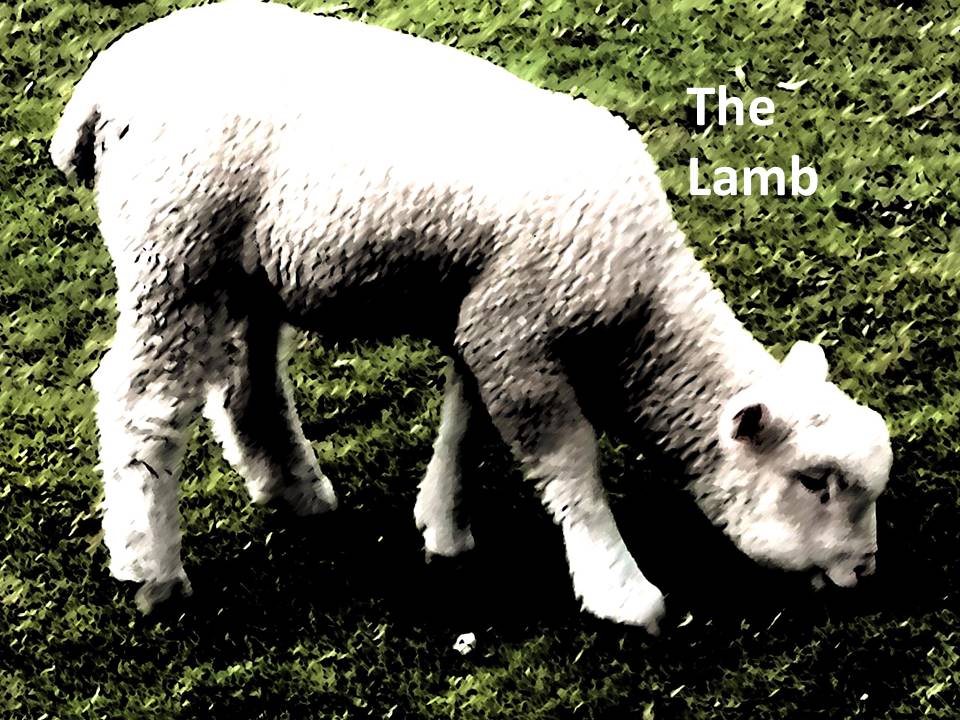
The Lamb

If you take a long look at this lamb, you will find yourself thinking all sorts of things.  You might be struck by its innocence, its powerlessness or you may wonder about its future.  This lamb has not done anything wrong, it has no defences or weapon and it may end up on someone’s plate as a favoured dish before it ever gets to be a mature sheep. Does it not strike you as extraordinary that the Most Mighty One to walk this planet Earth was called ‘The Lamb of God’? This lamb is associated with meekness not with majesty, with the Will of man rather than the Will of God. To understand why Jesus Christ, the Son of God, is called ‘The Lamb of God’ it’s necessary to consult both the Old Testament and the New – once truly understood never truly forgotten. Why a lamb rather than a sheep? A sheep is reared for its wool but a tender lamb gives its life.

  • ‘Isaac spoke up and said to his father Abraham, “Father?” “Yes, my son?” Abraham replied. “The fire and wood are here,” Isaac said, “but where is the lamb for the burnt offering?” Abraham answered, “God himself will provide the lamb for the burnt offering, my son.” And the two of them went on together’ – Genesis 22:7-8

Winter

In 1623, William Shakespeare wrote a far-fetched play entitled ‘The Winter’s Tale’, borrowing heavily from the plot of Robert Greene's pastoral romance ‘Pandosto’, first published in 1588.  Part tragedy and part comedy, it spoke of the deep pain that is caused by separation and the wasted years when relationships break down. Despite the sorrow of the first three acts involving jealousy, accusation, death and injustice, things turn out well in the end.  The two fathers, Leontes and Polixenes seem spiritually dead and have lost all ability for feelings.  However, there is a resurrection at the end and joy as reconciliation comes through Florizel and Perdita in the next generation.  Winter is the season when structures are revealed as trees shed their leaves and you see their essence. This tale echoes this process in a fanciful story but God’s story does it in stark reality as relationships are redeemed through from his son’s work on a bare tree.

  • ‘I prefer Winter and Fall, when you feel the bone structure of the landscape. Something waits beneath it; the whole story doesn't show’ – Andrew Wyeth
  • ‘Even in Winter an isolated patch of snow has a special quality’ – Andy Goldsworthy