PASSOVER

Over time, the word ‘passover’ has been taken to mean various things, some having been genuinely misunderstood and others being misappropriated from the original meaning.  One example is the passing of the Israelites through the Red Sea as they escaped from the Egyptians and another refers to when a person dies and they are said to passover. The correct application of the word refers to the passing over by the Lord in mercy on houses marked with the blood of a lamb in the final judgement on Egypt.  Such was the impact of this moment when the firstborn of all those living without this protection in Egypt died that there was a loud wailing throughout the country. This sad event was a catalyst to Pharaoh setting the Jewish nation free and has been remembered annually by practicing Jews ever since.  Passover (or Pesach) is in the Spring and is one of the three main annual festivals celebrated. It not only marks the liberation of the Jews from slavery in Egypt, but also the giving of the Ten Commandments and the journey to Israel. The ‘Hagaddah’, which is the story of the exodus from Egypt, is read at this celebration and takes the form of a ritual meal with many symbolic components. It was important to Jesus and we should know why.

  • ‘Passover and Easter are the only Jewish and Christian holidays that move in sync, like the ice skating pairs we saw during the winter Olympics’ – Marvin Olasky

Three and One

To some this may sound like secret code but to others it’s understood as the ancient reference to ‘The Trinity’! Apart from what God has revealed, much will remain mysterious as to how God the Father, God the Son and God the Holy Spirit can be three persons and yet one.  Many have tried to explain this in simple terms – you may recall such examples as a three leaved clover or the three states of water in liquid, gas and ice.  The featured tree trunk has three sections and yet is one – there is no metaphor that can adequately explain or help us fully comprehend ‘the Godhead’.  Valiant though any attempts of ours may be from our finite end of the telescope, they will all fall short.  Rather than being troubled about the hidden things, it is better to focus on what is known.  ‘Trinity’ is not a word that appears in the Bible but it was first used by early theologian Tertullian. The theological understanding was finalized at the First Council of Nicaea in 325 AD after years of debate.

  • ‘The Doctrine of the Trinity teaches that within the unity of the one Godhead there are three separate persons who are coequal in power, nature, and eternity’ – Walter Martin
  • ‘God eternally exists as three persons, Father, Son and Holy Spirit, and each person is fully God, and there is one God’ – Wayne Grudem

Victory Over Defeat

Do you live in the shadows or in the sun?  If you take a few minutes to consider the highs and lows of your life so far, how do you think it adds up? We all want to live on ‘victory hilltop’ but often find ourselves in the ‘valley of defeat’.  This can be related to achievements, finances, relationships, moral decisions, faith and our walk with God.  Rather than being a steady progression, for many Christians life seems more like a game  of ‘Snakes and Ladders’ – one minute riding high and the next crashing down a spiral of disappointment when apparent success has given way to abject failure.  This woodland walk is beset with pitfalls from unseen hazards in the shadows but there is a better path heading towards the light.  How to get on the path where gains outweigh losses and victory triumphs over defeat?

  • ‘The first and greatest victory is to conquer yourself; to be conquered by yourself is of all things most shameful and vile’ – Plato
  • ‘Every moment of resistance to temptation is a victory’ – Frederick William Faber

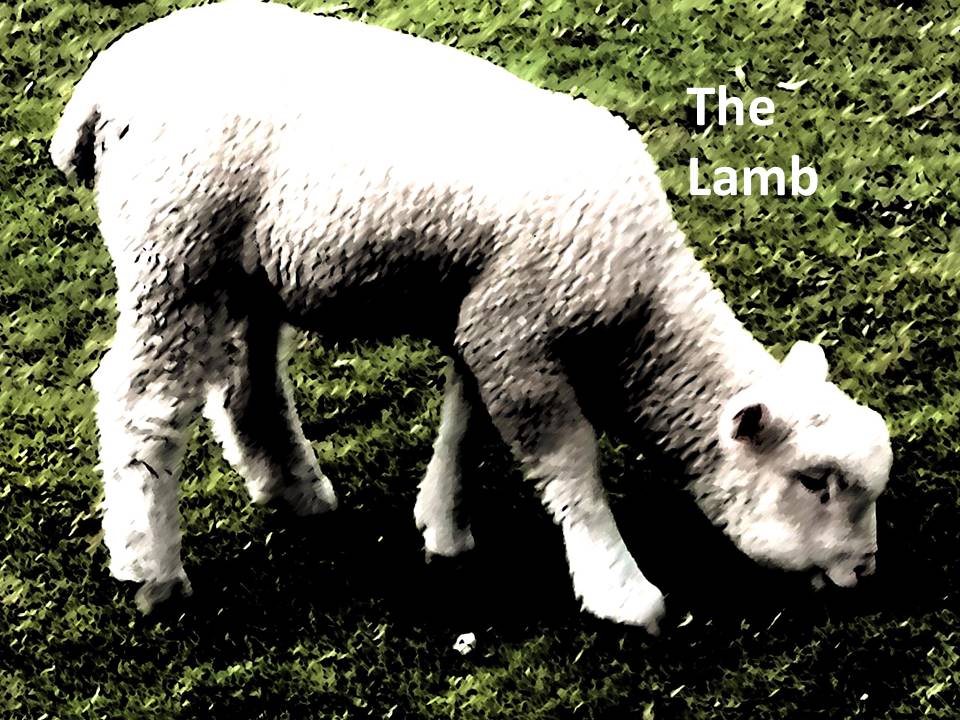
The Lamb

If you take a long look at this lamb, you will find yourself thinking all sorts of things.  You might be struck by its innocence, its powerlessness or you may wonder about its future.  This lamb has not done anything wrong, it has no defences or weapon and it may end up on someone’s plate as a favoured dish before it ever gets to be a mature sheep. Does it not strike you as extraordinary that the Most Mighty One to walk this planet Earth was called ‘The Lamb of God’? This lamb is associated with meekness not with majesty, with the Will of man rather than the Will of God. To understand why Jesus Christ, the Son of God, is called ‘The Lamb of God’ it’s necessary to consult both the Old Testament and the New – once truly understood never truly forgotten. Why a lamb rather than a sheep? A sheep is reared for its wool but a tender lamb gives its life.

  • ‘Isaac spoke up and said to his father Abraham, “Father?” “Yes, my son?” Abraham replied. “The fire and wood are here,” Isaac said, “but where is the lamb for the burnt offering?” Abraham answered, “God himself will provide the lamb for the burnt offering, my son.” And the two of them went on together’ – Genesis 22:7-8

Saint or Sinner?

Is it both, either or neither?  Many Christians feel a sense of split identity – saint or sinner? Perhaps sometimes feeling more ‘saintly’ whilst at other times feeling a ‘downright sinner’!  Have you ever felt this?  St Augustine was one such who agonised over the good person he wanted to be and the sinner that he publicly confessed himself to be.  This painting of him portrays something of that tension.  Born in 354 AD to Monica, a devout Christian, he had at least two mistresses, an illegitimate child and lived a life of life of hedonism ruled by lust and worldly ambition, famously saying:  “God, grant me chastity and continence, but not yet”.  Yet when he was 31, he became a follower of Christ, then the Bishop of Hippo laying down much Christian doctrine.  Bishop Possidius of Calama recorded him as one who ‘ate sparingly, worked tirelessly, despised gossip, shunned the temptations of the flesh, and exercised prudence in finances’.

  • ‘Thou hast made us for thyself, O Lord, and our heart is restless until it finds its rest in thee’ – St Augustine
  • ‘There's a duality in every man and every woman’ – Raquel Welch

Portals

Mortals love portals!  Technically speaking, on the one hand portals refer to gateways, doors and openings.  On the other, a portal specifically means a website or web page providing access or links to other sites.  It is a word that has grown in popularity and breadth of application to include video games and various secure log-in technologies. How do you understand the word?  What portals would you say that you use or rely on for your everyday life or for the deeper things? With the rapid changes, today’s technology will be yesterday’s technology tomorrow!  You need multiple connections to keep up but even those portals for mortals are soon out of date. 

  •  ‘A portal is a transitionary device of sight or sound that functions as a sort of third gravitating body between the this and the that, pulling us toward itself, allowing us to bridge into the unknown from the known’ – Roy H Williams

BACKSLIDING

Some people are professional backsliders and some do it just for the fun of it!  The first recorded use of the term ‘luge’ was in 1905 and derives from the Swiss dialect of the French word luge, meaning ‘small coasting sled’.  It involves lying on your back on the luge and hurtling down either steep roads or ice tracks at speeds from 80mph upwards with great risk to life and limb.  Though most injuries involve bumps, bruises, broken bones and concussions, there have been at least four fatalities in public sporting events.  To lie on your back puts you in a place of exposure to risk and makes you vulnerable.  Not that this cat is going anywhere fast in its backsliding!  However there are many ways that a person who once felt secure in faith begins backsliding.  Where will it end?  Many have argued that a Christian can lose their secure position – what do you think?

  • ‘Collapse in the Christian life is seldom a blowout.  It is usually a slow leak’ – Paul E Little

Remembering

Some people still tie a knot in a handkerchief and most of us still write a list of some kind to help our memories.  It might be an old photograph, the whiff of a familiar smell, the lines of a poem or the sound of an old tune and our memories can be triggered.  They might just conjure up a face from the past, an event that happened, a past friendship or they could unlock a dam so that you are flooded with powerful emotions.  Why do we remember and what value is there in remembering?  How could a glass of wine and a bread roll have such profound significance for remembering?  The simple Forget-me-not flowers provide the clue!

  • ‘Perhaps nothing helps us make the movement from our little selves to a larger world than remembering God in gratitude.