

Practical wisdom on moving past cynicism, handling skeptical family members, and plugging back into the Source of life.
We live in a deeply hyper-connected world. Our smartphones constantly buzz, our laptops stay synced to the cloud, and we track our lives down to the minute. The metaphor of connection is something we understand natively. Every single modern electrical appliance or internet device relies completely on connection to function. They are designed for their true identity, value, and purpose to be unlocked through a reliable source of power.
How much more so for the complex design of a human being?
Yet, when it comes to spiritual life, so many of us are living on low battery. We wonder why we hit “the wall,” why our motivation drains away, or why a sudden crisis of faith leaves us spinning out of orbit. We try to busk it. We rely on good intentions, thinking a casual, superficial nod toward faith on a Sunday morning will give us enough juice to survive a volatile and challenging week.
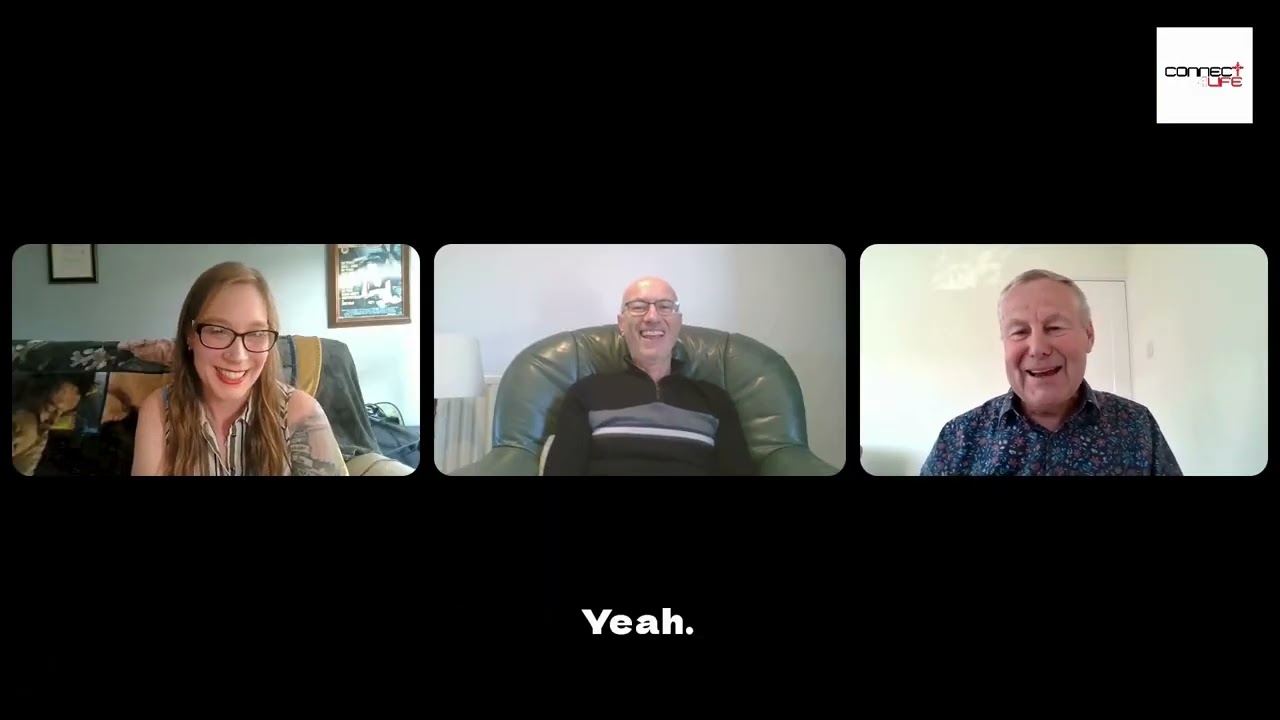
In a recent deep-dive conversation, Olaf Fogwill (Founder of Connect4Life) sat down with Stephen Gaukroger (Founder of Clarion Trust, Author and Christian Leader) and Content Specialist Sophie Porter to look past the surface layer of modern faith.
They tackled a question that hits close to home for every believer, whether you’re a newcomer or a seasoned traveler: How do we establish, maintain, and protect our connection over the long haul?
Stephen introduced a remarkably simple, down-to-earth concept that cuts straight through the spiritual noise: The Three-Pin Plug.
To receive a continuous supply of spiritual power, protection, and stability, all three pins must be firmly pushed into the socket. If even one pin is loose, the connection fails.
Are your pins firmly in place, or are you starting to drift? Let’s take a look at the three connectivities that keep us in a healthy orbit:
1. Connection to the Word (The Grounding Pin)
When life gets turbulent, human wisdom is interesting, but God’s Word remains the only foundation that can be trusted for the path ahead. It grounds us. But let’s be honest: the Bible can feel like a daunting, complicated library of books. If you try to jump straight into the deep end with Leviticus or Deuteronomy, you might find yourself stuck.
If you are just starting out or trying to reconnect, start where you can be fed. Anchor yourself in the stories of Jesus, the raw honesty of the Psalms, or the liberating truth of grace. Don’t just read it to satisfy intellectual curiosity; read it to know the Person behind the text.
2. Connection through Prayer (The Power Pin)
Prayer isn’t a performance, and it doesn’t require a special, super-spiritual vocabulary. Some believers use such heavily religious language that they sound entirely bizarre to the outside world! Real prayer is a continuous, practical conversation with your Creator. It’s a lifelong habit of saying, “God, I need your help today. Protect me from making stupid, selfish choices. Help me relate to my family. Guide my steps at work.”
When we stop talking to God, our wayward hearts naturally begin to distance themselves. The further away we get, the harder it becomes to hear the voice of the One calling us back. Keep the channel open.
3. Connection to the Community (The Safety Pin)
You cannot live the Christian life in isolation. We need to be plugged into a local church, a small group, or a core circle of believers who have been traveling this road a bit longer. Why? Because when you are hitting a rough patch, going through a personal tragedy, or struggling with doubt, it can be incredibly difficult to discern God’s voice directly in scripture or prayer.
But you know where you can hear His wisdom beautifully clear? Through the lived experience, the listening ear, and the shared story of a Christian friend.
What About the Disconnected?
It’s easy to talk about staying plugged in when everything is going well, but what happens when failure hits, or when life brings you down to your knees?
Olaf notes that a massive group of people in our communities are “the disconnected”: those who have actively pulled away from God or the church due to profound disappointment or severe church hurt.
Let’s be completely transparent: church members can occasionally be an absolute pain in the backside. Leaders fail, communities handle personal tragedies with cold indifference, and people get deeply wounded.
If that’s your story, hear this loud and clear: You may be disillusioned with God or the church, but God is not disillusioned with you. He never had any illusions about you in the first place! He loves you exactly as you are, warts and all.
Living a life of cynical disillusionment is an exhausting, unfulfilling way to live. Ultimately, cynicism only hurts the person carrying it. If you want to find your way back, don’t look backward to the exact environment that broke you. Look forward. Seek out a fresh start, find a mature person or a new community context that will simply listen, unpack your pain, and guide you pastorally without an agenda.
Your Experience is Your Greatest Hook
Whether you are fully connected, trying to reconnect, or introducing faith to an unconnected family member who thinks Christianity is totally obsolete, the answer always comes back to the power of a shared story.
In our postmodern world, everyday church members don’t need academic degrees in theology to break through the noise. People love to argue over historical contradictions, religious rules, or the problem of suffering. But as Stephen beautifully reminds us: A person with an experience is never at the mercy of a person with an argument.
Nobody can deny your authentic, personal story. When you share a transparent glimpse of how God met you in your weakness, or how His grace set you free from a “double life,” it is incredibly attractive and disarming.
Take a moment today to check your connectivity. Are you fully plugged into the Word, into prayer, and into community? If you’ve drifted into the shadows, don’t wait. Grab hold of the hand of mercy, push past the cynicism, and plug back into the Source of life.
Want to dive deeper into this discussion? We’ve put together a full article download and a complete video interview where Olaf, Stephen, and Sophie unpack these ideas even further.
Click the links below to watch the video, download the PDF guide, and find out how you can share your own faith journey with those around you.
WATCH THE FULL VIDEO INTERVIEW HERE:
DOWNLOAD THE ‘ART OF LIFELONG CONNECTION’ PDF GUIDE
A Huge Thank You!
We want to say a massive thank you to Stephen Gaukroger of Clarion Trust for his wonderful participation in this interview, and to his assistant, Sue, for her incredible support behind the scenes. It was an inspiring, fun, and deeply interesting discussion, and we are so grateful for their time and wisdom in helping bring this together!
Comments